
Establish a baseline
Record affected and comparison readings before a drying plan is described.
Miami-Dade service guide
Floors and walls can look dry while moisture remains inside. Ask how materials will be checked, equipment will be placed and drying progress will be documented.
Call for a Quote(269) 461-9782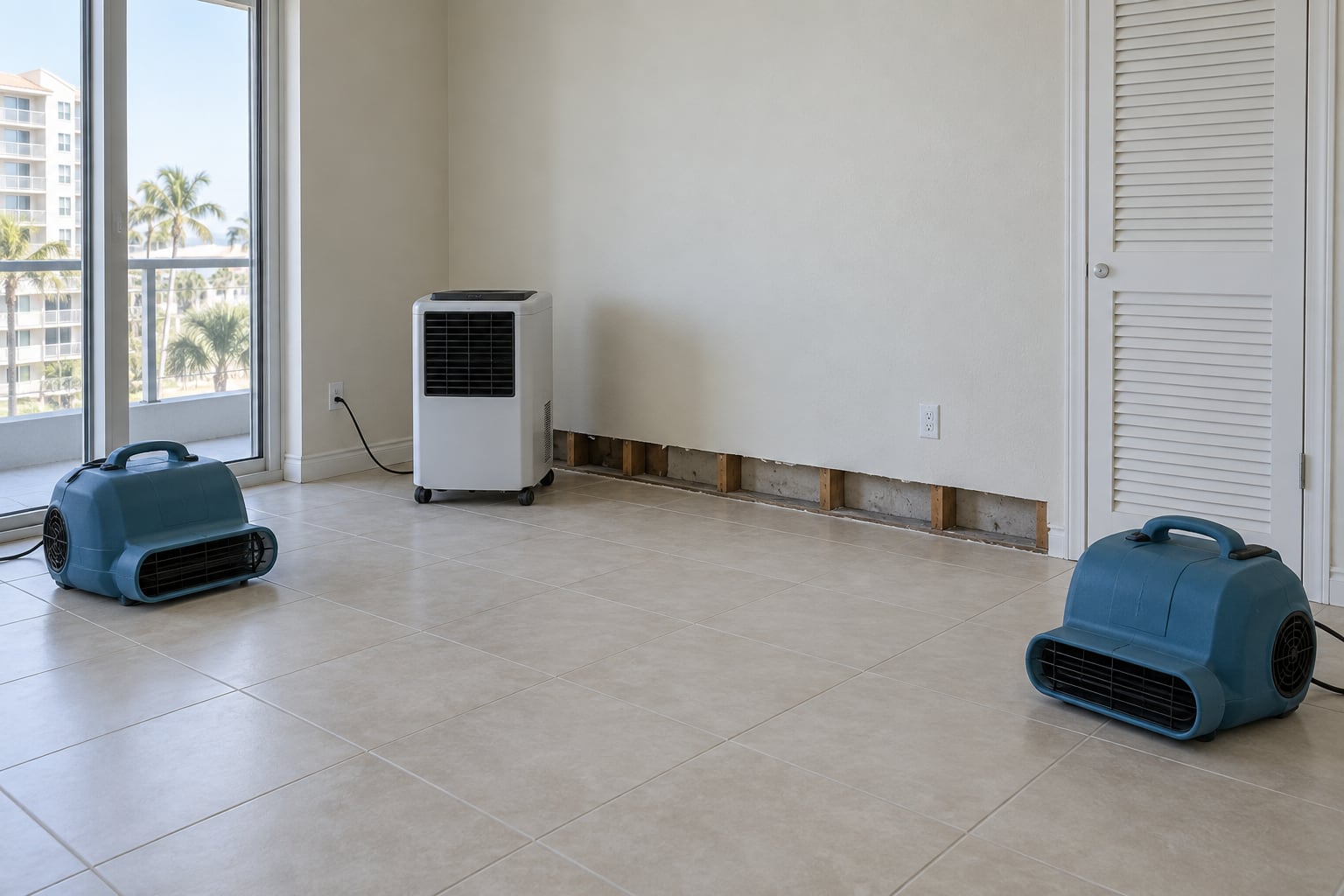
On the call
Share the complete address and incident details. Confirm who is calling, whether the job is a fit and what the written terms include.
Share the complete address and what happened at the property.
Get the provider's company name and confirm that it serves the address and job type.
Before authorizing work, confirm scope, timing, price, exclusions and change terms.
01 · Scope the work
Ask what will be assessed, performed and documented before you authorize work.
Record affected and comparison readings before a drying plan is described.
Air movement and dehumidification should match the space, materials and containment needs.
Ask what readings will support equipment changes, material removal or completion.
02 · Process
A clear process separates the incident, assessment, work sequence and records.
Share the source, time discovered, affected rooms and any safety concerns.
Distinguish visible water from moisture held in floors, walls, cabinets and cavities.
Separate source control, extraction, drying, monitoring, cleanup and repair.
Keep the written scope, readings, photos, receipts and change approvals together.
Before you authorize the work
03 · Questions
No universal answer replaces an assessment of the actual property.
There is no truthful universal time. Materials, weather, access and the extent of wetting all affect the plan.
Not always. A professional assessment should distinguish materials that can be dried from those that cannot be safely or practically restored.
Ask for a written scope, equipment plan, progress notes and a clear handoff to any repair work.